Participez en partageant vos idées, vos expériences et votre curiosité ! La science s'invite en ville vous invite à participer de différentes manières.
Chaque format offre un moyen unique de relier la science à la vie de tous les jours et de faire une différence tangible dans votre communauté.
En participant, vous ne vous contentez pas d'observer la science : vous en faites partie. Vos idées, vos expériences et vos connaissances locales contribuent à l'élaboration de solutions pratiques, à la production d'informations utiles et à la création de projets pertinents, percutants et scientifiquement fondés.
L'engagement est ouvert à tous, quels que soient l'âge, les antécédents ou l'expertise. Que vous participiez seul, avec des amis, votre famille, votre classe ou votre club, votre point de vue compte. Ensemble, nous pouvons rendre la science plus ouverte, plus accessible et plus pertinente. Transformer la curiosité en action et les idées en changement dans les quartiers, les écoles, les clubs et les villes.
Co-Création signifie "créer ensemble". Les citoyens, les scientifiques, les autorités locales et les organisations collaborent sur un pied d'égalité, chacun apportant sa propre perspective. Les scientifiques apportent leur expertise, les citoyens leur expérience quotidienne et les organisations connaissent les conditions pratiques.
Contrairement à la participation traditionnelle, où les citoyens font généralement leurs commentaires à la fin, la co-création commence dès le début, en déterminant les sujets importants. Ensemble, les participants développent des idées, posent des questions, trouvent des réponses et mettent en œuvre des solutions. Le résultat : des projets pertinents, pratiques et scientifiquement fondés.
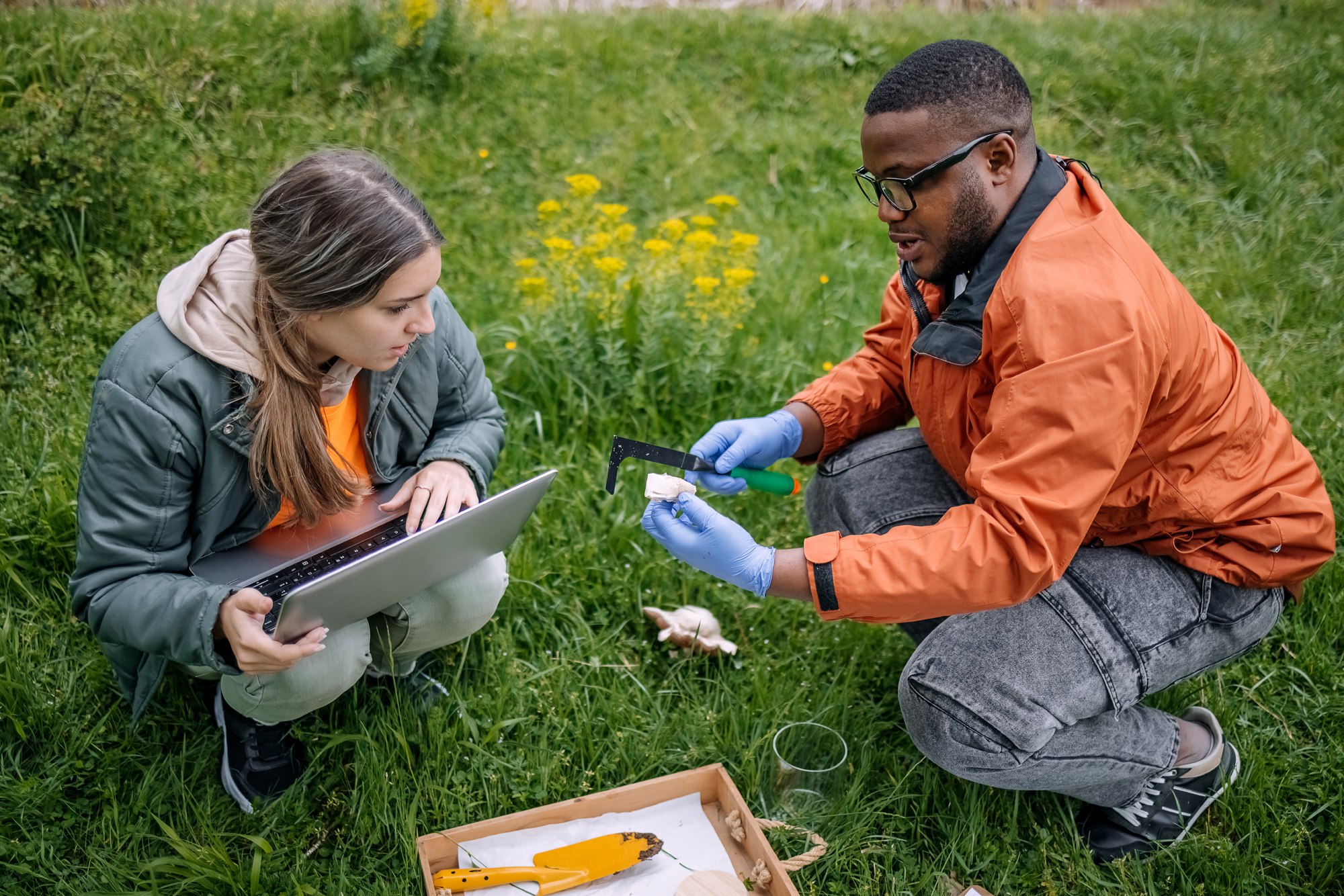
La cocréation est ouverte à tous, quels que soient l'âge, l'expérience ou l'expertise. Il s'agit de façonner activement les résultats, de combiner les perspectives et de créer des solutions qui font une réelle différence : dans les quartiers, les écoles, les clubs ou les villes entières.
La co-création est donc plus qu'un simple processus de participation. C'est un moteur d'innovation, de démocratie vécue et de changements concrets dans l'environnement de vie des gens.
Visitez les sites web locaux de Co-Création pour rejoindre le mouvement !
Le projet Co-Creation fait partie de l'initiative européenne Science Comes to Town. À Kiel, Brest et Split, les citoyens sont invités à développer leurs propres projets de recherche sur des sujets qui leur tiennent à cœur dans leur vie quotidienne. Il ne s'agit pas d'expériences de laboratoire compliquées, mais de projets pratiques qui relient la science à la vie quotidienne locale.
Notre objectif : rendre la science tangible et pertinente, transformer les citoyens en chercheurs et créer des connaissances qui profitent directement aux villes.
Qu'est-ce que la science citoyenne ?
La science citoyenne consiste à impliquer les citoyens dans la recherche scientifique - en travaillant ensemble pour créer de nouvelles connaissances et faire avancer la science.
Dans des domaines tels que l'environnement, l'éducation, la santé, les sciences humaines et sociales, un nombre croissant d'initiatives rassemblent chercheurs et citoyens dans un processus commun de création de connaissances. Cet engagement peut prendre de nombreuses formes, depuis l'élaboration de projets de recherche et la collecte ou l'analyse de données jusqu'au partage et à la publication des résultats.
Les projets de science citoyenne contribuent à
Identifier, évaluer et soutenir des projets de sciences citoyennes à Brest, Kiel et Split
Dans le cadre de Science Comes to Town, Brest, Kiel et Split travaillent ensemble pour identifier et analyser les projets de science citoyenne dans leurs villes et au-delà.
La science citoyenne couvre un large éventail de méthodes, d'approches et d'objectifs. En raison de cette diversité, il est parfois difficile d'identifier, de comparer ou de partager ces projets d'une région à l'autre. L'étude Science Comes to Town vise à changer cela - en créant une compréhension commune et un cadre d'évaluation pour ces initiatives, en promouvant l'engagement des citoyens et en soutenant la diffusion de ces projets dans toute l'Europe.
En bref, d'ici 2026, Science Comes to Town vise à :
📚 Produire une vue d'ensemble et une évaluation des projets de science citoyenne à Brest, Kiel et Split.
✨ Organiser des événements qui mettent en lumière les initiatives existantes et donnent aux citoyens des occasions de s'impliquer.
🤝 Étudier les moyens de développer un projet de science citoyenne commun aux trois villes partenaires.
Vous participez à un projet de science citoyenne ou vous en menez un vous-même ? Participez à l'inventaire Science Comes to Town!
Que votre projet soit basé dans la région de Brest, Kiel ou Split, votre contribution est très appréciée. Quel que soit le sujet - environnement, santé, éducation, sciences humaines et sociales - et quel que soit le mode d'implication des citoyens, vos idées nous intéressent.
En participant à cette étude, vous contribuerez à faire progresser la science citoyenne et à donner une plus grande visibilité à votre projet dans toute l'Europe.
Contact :
Brest : sciencecomestotown@oceanopolis.com
Kiel : sctt@kielregion.de
Split : scttsplit@gmail.com
Overview
As part of the European project Science Comes To Town, Brest, Kiel and Split invite citizens to take part in a scientific competition. Twelve teams will compete in three game-based challenges. The winning teams from Brest, Kiel and Split will travel to Kiel in December for the grand final.
Stage 1 & 2 · September/October
Quiz
Stage 3 · December
Final round
Each challenge will be supervised by scientists, and the number of teams selected for the next stage will be reduced by half.
This scientific competition aims to show how science addresses local and concrete challenges, while encouraging citizens to express their scientific knowledge by working on a variety of themes.
This format promotes curiosity, creativity, teamwork, and open discussion, creating an inclusive space where science becomes accessible to a wide audience.
The event combines different types of challenges, transforming science communication into an engaging public experience. Participants are invited to take an active role, collaborate as a team, and exchange viewpoints with researchers on topics ranging from sustainability and health to engineering, cultural heritage, and marine sciences.
Applications are open to all residents of the three cities. Teams must consist of five people aged over 14, one adult and at least one team member must speak English.
No prior scientific or university experience is required.
Special attention will be given to teams that demonstrate diversity – age, gender, profession, and more.
The ten selected teams per city commit to participating in both stages of the competition and to travelling to Kiel in the event of a win.
Application deadline
Applications are open!
Please submit your application using one of the following methods depending on your city of application. If you are underage, please complete the parental consent form and attach it to your application.
Visit the local websites to join the competition!
Application forms
Mutual Learning, a Science Comes to Town initiative, is designed to bring together professionals and experts from across partner cities. These workshops create a collaborative environment where participants can exchange best practices, share experiences, and explore innovative approaches to topics of common interest.
Built around the principles of peer learning and co-creation, the workshops encourage participants to bring real challenges from their own institutions and cities. Through facilitated discussions, hands-on group work, and the sharing of practical expertise, participants work together to develop ideas, identify solutions, and gain new skills that can be applied and disseminated within their local contexts.
The programme also includes participant-led sessions offering opportunities for attendees to propose topics, showcase their own expertise, and explore emerging issues with their peers. Beyond the workshops themselves, the initiative aims to foster lasting connections and support the development of long-term communities of practice across Europe.
Four key themes for 2026
Together, these workshops strengthen collaboration, encourage innovation, and support the development of impactful science engagement activities.
Peer exchange
Participants share their own experience and methods
Real challenges
Participants bring current science communication questions from their institutions
Hands-on work
Teams develop ideas and solutions together
Participant expertise
Short sessions contributed by participants themselves
The programme also allows space for participant-led sessions, similar to a light bar-camp format, where participants propose topics they would like to share or explore.
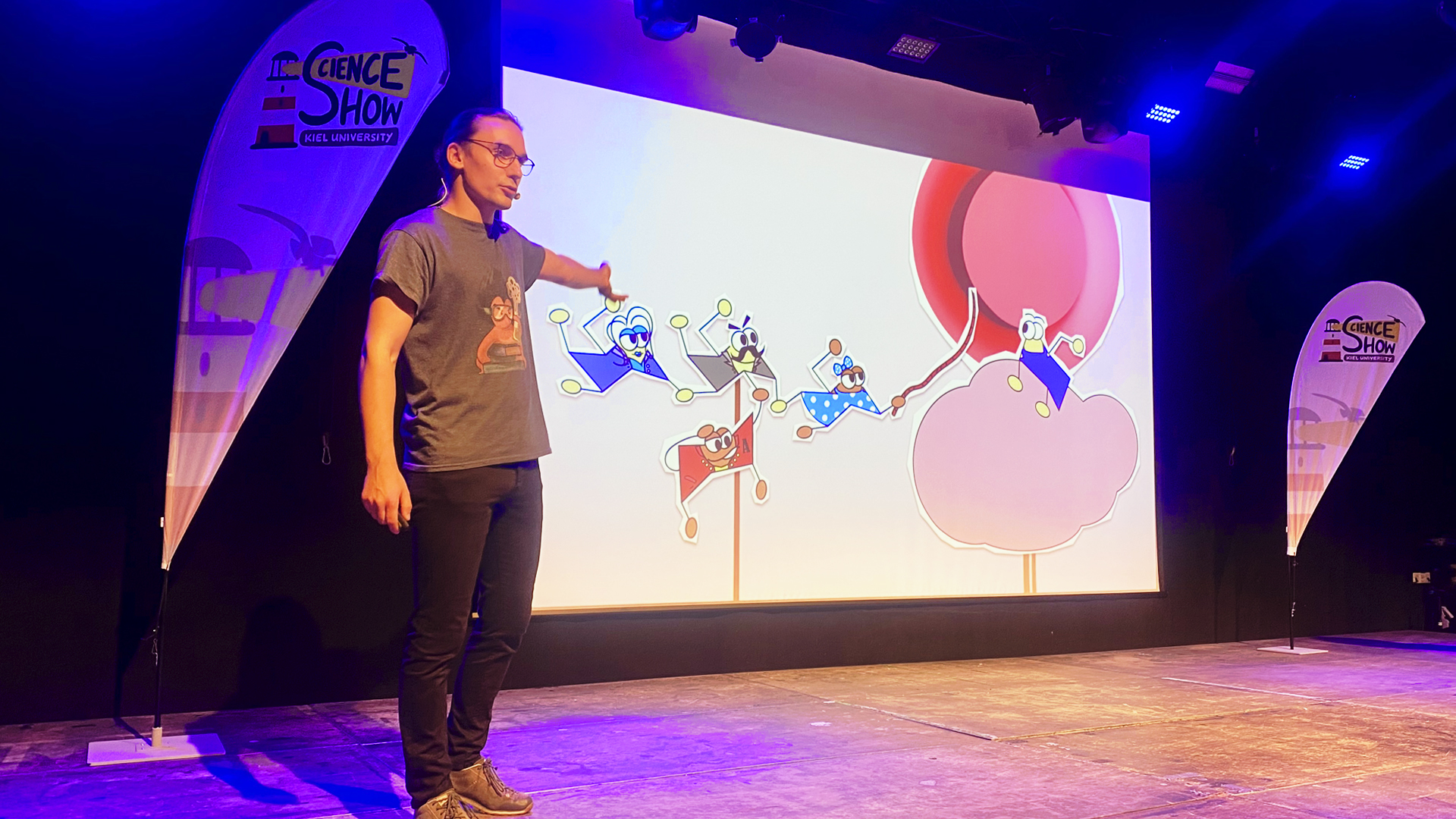
As part of the initiative “Science Comes to Town”, Kiel University (CAU) is offering an international Train-the-Trainer programme designed to extend the success story of the Science Show and provide fresh impetus for science communication. The aim is to prepare committed multipliers to bring the Science Show concept to their own cities and institutions – tailoring it to local contexts and target audiences.
Participants can look forward to a practical, modular training programme in 2026. Working within an international group, they will benefit from intensive professional exchange and a ‘wealth of experience’ that has been built up in Kiel over many years and further developed within the SEA-EU Alliance.
Certification
Upon successful completion of the programme, participants will be awarded an official certificate as a ‘Science Show Trainer’. This not only certifies the skills acquired but also makes participants active ambassadors for dynamic science communication.
The Train-the-Trainer programme represents a significant step toward the sustainable dissemination of the Science Show – and toward making science visible, understandable, and inspiring across Europe.

The Science Show at Kiel University brings current research to the stage – in a lively, accessible and engaging way. Young researchers share their work with a broad audience, bringing science to life outside the lecture hall.
Speakers also get the chance to build confidence and sharpen their own presentation style. They're coached by Ulf Evert and Katharine Simmons, who have spent years running practical presentation courses for students and doctoral candidates – preparing participants to communicate their research with clarity, enthusiasm and confidence on stage.
More than an event – a platform for ideas, a training ground for talent, and a meeting place for science and the public.
Events in 2026
Women Science Show
5 March 2026 · Studio Filmtheater
Ocean Science Show
9 May 2026 · Segelcamp Kiel
Science Show at Kieler Woche
21 June 2026, 2:00 pm · Seeburg, Kiel
24 June 2026, 1:45 pm · Junge Bühne, Ratsdienergarten, Kiel
27 June 2026, 2:00 pm · Seeburg, Kiel (in English)
Science Comes to Town staff week
30 June – 2 July 2026 · Kiel
Science on the Beach
30 July 2026, 5:00 pm · Konzertmuschel, Laboe
Science Show @ EUCYS
23 September 2026 · CAU Kiel
Science Show @ Science Day
25 September 2026 · Pumpe
European Researchers' Night
25 September 2026 · Gdańsk
Science Show
31 October 2026 · Faro
Night of the profs
20 November 2026 · CAU Kiel
Science Show
20 November 2026 · Bodø
Science in Advent
December 2026 · Seeburg
Professional development for teachers: experience research, discover new methods, and bring science to life in the classroom.
Discover Research
Explore exciting research topics and gain insights into scientific methods and research questions.
Share Knowledge
Discover methods and approaches for communicating scientific findings in a way that is accessible, creative, and relevant to everyday classroom practice.
Discover Research
Teachers create opportunities for students to engage with science and support them in asking questions, thinking critically, and developing their own interests. In this way, more young people can be inspired to pursue science.
Teacher Trainings are professional development programs for teachers that combine current research with practical approaches to teaching. In workshops and online sessions, participants explore a wide range of scientific topics and learn how to integrate scientific findings and research-based approaches into their teaching.
The aim is to support teachers in communicating science in an engaging and accessible way, sparking curiosity, and inspiring students to become enthusiastic about science. Exchange with researchers and other teachers provides new perspectives and creates valuable impulses for modern, research-oriented teaching.
Teachers are important multipliers: They accompany children and young people over many years and shape their access to knowledge, research, and societal issues. By connecting current scientific research with classroom practice, they can encourage young people to ask questions, think critically, and discover their own interests.
Early and positive exposure to science is also important when it comes to promoting equal opportunities. Teacher Trainings support teachers in making science accessible to different target groups and in highlighting a diversity of perspectives. In this way, they can help inspire more young people to engage with scientific topics and, in the long term, promote greater diversity in science and research – for example, in STEM fields, where women continue to be underrepresented.
As part of Science Comes to Town 2026, the Children's University returns to Kiel (Germany) and is held for the first time in Brest (France) and Split (Croatia). The programme takes place on the same day in all three cities, offering young people an exciting opportunity to discover the world of science together across Europe. The Children's University is designed for children aged 8 to 14 and invites them to explore fascinating topics from science, technology, culture, and society. Through engaging lectures and interactive activities, researchers and professors explain complex ideas in a way that is accessible, inspiring, and fun. Just like at a real university, the lecture hall is reserved exclusively for children, giving participants the unique experience of attending a university lecture on their own.
The programme is organized locally by academic and research institutions in each city and aims to spark curiosity, encourage critical thinking, and show young people how science helps us understand and shape the world around us.
"The incredible secret life of the mudflats" with Jérôme Morelle
Brest | Organised by Université de Bretagne Occidentale
"Understanding Cows: Getting to Know the Nature of Cattle" with Katrin Mahlkow-Nerge
Kiel | Organised by University of Applied Sciences Kiel
"Beneath the Surface of the Sea" with Daria Ezgeta Balić
Split | Organised by Institute of Oceanography and Fisheries
"Informatics for understanding natur" with Jérémy Rivière
Brest | Organised by Université de Bretagne Occidentale
"Bandage or Ambulance?" with Kay Schmidt-Rethmeier
Kiel | Organised by University of Applied Sciences Kiel
"BizLabJunior investigates: the secrets of missing money" with Sandra Pepur and Ana Rimac Smiljanić
Split
"Chemistry is fun: experiments and inventions by nature" with Françoise Conan and Lucile Chatelain
Brest | Organised by Université de Bretagne Occidentale
"Robots and Ice?! Sounds Crazy, but It's Really Cool!" with Bernd Finkemeyer
Kiel | Organised by University of Applied Sciences Kiel
"From the Pole to the Equator: The Journey of a Drop of Water" with Jadranka Šepić, Marin Vojković, Natalija Dunić and Suzana Antunović
Split | Organised by Institute of Oceanography and Fisheries
"Antique books and archives" with Yves Coativy
Brest | Breton and Celtic Research Center, UBO
"DNA Detectives: What Ancient Bones Reveal About Hidden Family Connections and Diseases" with Ben Krause-Kyora
Kiel | Organised by Kiel University
tba
Split
"Learning math while having fun" with Vincent Calvez and and Caroline Poisard
Brest | Mathematics Laboratory of Brittany-Atlantique and Center for Research on Education, Learning, and Pedagogy, UBO
"Research Vessel Adventures: Expeditions Across the World's Oceans" with Sebastian Krastel
Kiel | Organised by Kiel University
tba
Split
"How does a multisensory touch-and-feel book help people understand marine plastic pollution?" with Geraldine Le Roux
Brest | Breton and Celtic Research Center, UBO, Brest
"The Cake Paradox" with Tim Hollstein
Kiel | Organised by University Hospital Schleswig-Holstein
tba
Split
Whether you are curious about space, oceans, technology, health, history, or the future of our society, the Children's University offers a unique opportunity to meet scientists, ask questions, and experience research first-hand.
Participation is free of charge. Further information on registration, venues, and local programmes will be provided by the organizing institutions in Brest, Kiel, and Split.
Visit the local Children University websites to join the movement!