A marine archaeologist calls for stronger public outreach and education to protect ‘planet water’
By Timothy Spence
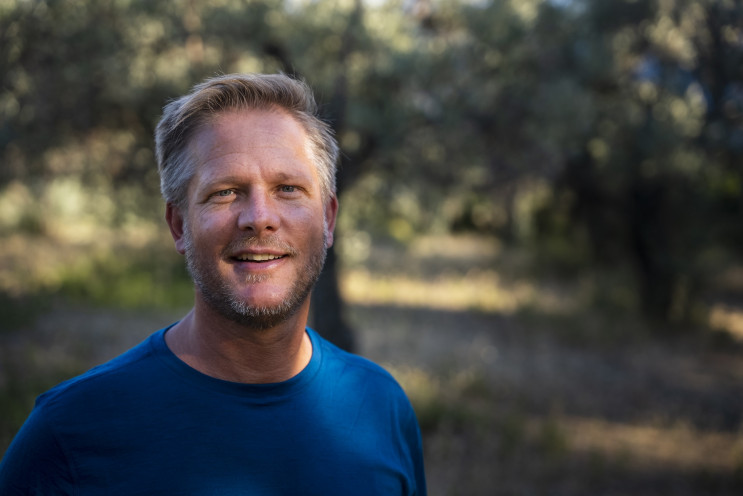
When Florian Huber goes to work, he explores shipwrecks and other artefacts of human history, hidden in a world that few others will ever see.
The marine archaeologist and avid diver’s research into the submerged past also reveals a troubling picture of the present: underwater ecosystems are increasingly threatened by pollution, plastic waste, overfishing and other contemporary activities. Furthermore, rising water temperatures are jeopardising the delicate ecological balance between land and the oceans, which cover more than two-thirds of the Earth's surface.
“When you look at Earth from space, you see blue — the oceans. It’s planet water, not planet Earth,” points out Huber, who along with three marine biologists founded Submaris, a Kiel-based company providing diving services for scientists and the news media. “If the oceans have a problem, we will have much more serious problems on land.”
Waste and pollution are relatively easy to spot. Deeper down, Huber has observed a steady decline in biodiversity during his explorations of submerged wrecks. “I’ve been diving now for more than 30 years and I’ve seen how fish are decreasing in the Baltic,” he says. “There are no more cod hiding under shipwrecks, and there are no more eels. What we are now seeing down below are signs of a very fragile planet.”
Creating awareness about these issues is central to Huber’s work. A former lecturer at Kiel University’s Institute of Pre- and Protohistoric Archaeology, Huber is one of the city’s ambassadors to Science Comes to Town (SCTT). Kiel — along with Brest, France and Split, Croatia — are host cities for the project. The year-long programme, backed by the European Commission, seeks to connect researchers and the community, as well as spark interest in science education.
“Scientists need to find a language and a way to share information so everybody can understand it,” Huber explains, “and Science Comes to Town is a way to do that.” Furthermore, making science more accessible helps counter misinformation and increases awareness about the marine environment’s contribution to Earth’s ecological balance. “We talk about how fascinating the oceans are and how important they are, but we also need to show people how endangered they are,” Huber notes.
Protecting the world we do not see
Huber's efforts to promote awareness come as the European Parliament considers the ‘Ocean Pact’, which the Commission hopes will create a unified framework for the EU’s marine policies. He believes policymakers need to prioritise ocean protection and education to ensure healthy marine ecosystems for future generations.
Many people are indifferent to the problems facing the oceans, Huber laments, even though an estimated 40% of Europeans live within 50km of a sea. In Bavaria, his home state in Germany’s southern Alpine region, he says that people are often more focused on local issues, such as melting glaciers and over-tourism. “But people need to understand that the ocean absorbs carbon, it helps cool the climate and it helps produce the oxygen we breathe,” Huber explains. “We are basically a water planet, and we all need to protect it.”
The marine archaeologist speaks passionately about the submerged graveyards he explores. Seafarers helped spread ideas, commerce and civilisation — as well as conflict and oppression — but their misfortunes at sea left a treasure of information for modern researchers. “That is why I love shipwrecks so much, because they help us understand how people lived, their technological capabilities and what resources people had,” Huber says. “The oceans were like the first Autobahns, allowing people and goods to travel all over the planet, and today they still account for most of the cargo transported around our planet.”
Huber is known in Germany for inspiring younger audiences. He has written several children's books about the underwater world, including an upcoming book on the Titanic shipwreck. It is important to encourage students and young adults to study science, he says. “I want to give them the courage to say, ‘hey, when I finish school, I can become a scientist’.” He makes regular media appearances and is active in community science events in Kiel.
Studying marine debris across the world
Huber studied archaeology, anthropology and Nordic ethnology at universities in Germany and Sweden and is a graduate of Kiel University's Scientific Dive Centre. He has taken part in expeditions and excavations in Europe and other regions, including Ghana, Mexico, Chile, New Zealand and the Azores. As well as shipwrecks, he also researches submerged settlements dating to antiquity.
Millions of sunken ships litter the world’s seabeds. Over time, they are colonised by marine organisms and provide valuable laboratories for archaeologists, biologists and other researchers. But they also provide evidence of how human activity on land affects the oceans.
Recent armed conflicts, such as those affecting the Black Sea and Strait of Hormuz, are a reminder of the risk to oceans posed by sunken warships and other military equipment. “These are ticking time bombs,” Huber warns, noting the enduring nature of the risks. First and second world war shipwrecks are still scattered across the world, he says, and continue to pollute the oceans long after those conflicts ended.
Science|Business, which connects policymakers, academics and industry through its news reporting, analysis and events, is an SCTT partner. Visit the article at Science|Business: : https://sciencebusiness.net/diving-past-understand-future